North Queensland, Day 1, 20 July 2017. Cairns sites and Kuranda

By the time I'd sorted out my campervan following a delayed flight it was already late morning before I managed to get any birding done. Being knackered too didn't help but I headed for the Jack Barnes Mangrove Boardwalk on the airport access road first as it was the nearest and most convenient site. Due to tiredness and the time of day it was a slow start with a nice male Mistletoebird being my first new bird. I was up and running! Brown Honeyeater (soon to become the typical 'trash' bird!) followed with Olive-backed Sunbird and a fly-over Tree Martin.

 Mistletoebird

I decided that Cairns Esplanade was a good next bet as it was just around the corner. Unfortunately I arrived to find the tide way out and most birds just distant specks! A park at the north end gave me a good opportunity to familiarise myself with some of the common Aussie species - Masked Plover, Straw-necked Stork, Willie Wagtail, the very odd Magpie-lark plus a small flock of Scaly-breasted Munias. Along the esplanade I did manage 6 Great Knot, Striated Heron, Great White Egret, c6 Australian Pelicans, Far-eastern Curlew, c8 Bar-tailed Godwits, Silver Gulls, Australian Gull-billed Terns and a nice view of an Eastern Osprey while landbirds included Rainbow Lorikeet, Australian Figbird, White-breasted Woodswallow and Common Myna.

Straw-necked Ibis

Magpie-lark

Masked Lapwing

 Willie Wagtail


Not far away is Cairns Botanical Gardens where I parked up and explored the southern section including Freshwater Lake and Saltwater Lake. Here I picked up my first wildfowl with plenty of Pacific Black Ducks and Magpie Geese. Australian Brush-turkey got me going but only because I had no idea how common they are at that stage! Herons were well-represented and included Striated Heron, Little Egret, Straw-necked Ibis and a nice Great Pied Cormorant. Rainbow Bee-eater was duly ticked and alongside a small group were Leaden Flycatcher and Olive-backed Sunbird. Spangled Drongo, Grey Fantail and Welcome Swallow were the best of the rest before I hit the road up to Kuranda.

Magpie Goose

Pacific Black Duck

 Striated Heron

After checking in at Kuranda Rainforest Retreat I went for a short walk around the grounds in the last hour of daylight. By far the best bird was a mega Wompoo Fruit Dove flopping about on the fruits of a palm but I also added Pacific Emerald Dove, the soon to be ubiquitous Sulphur-crested Cockatoo, Dusky Honeyeater, Lewin's Honeyeater, Graceful Honeyeater and Grey Fantail before hitting the sack.

     Wompoo Fruit Dove      

North Queensland, Itinerary and Logistics

This was a rather impromptu trip organised at short notice when Belinda decided she was going to Australia to visit her son. We flew out and back together but spent 16 days apart doing our own things. For me that meant birding!

Orgnising the trip was really quite easy using trip reports on 'Cloudbirders' and the site guide 'Finding Australian Birds' by Dolby & Clarke.

Flights and Transport

We found flights with Philippine Airlines for £775 return from Heathrow to Cairns via Manila. With thee cost of accommodation high, especially for single rooms I found the best option for a person on their own was to hire a small campervan (all inclusive £565 for 16 days) and pay the modest campground fees. These were between $22 and $34 (£13 and £21) per night including an electric hook up. Having said that the bottom of the range van I had was pretty ropey but it was mechanically fine and for taking it birding the dents and scratches didn't matter. I could have done without it being covered in flowers though! I slept well in it although if there had been 2 of us it would have been very cramped. The company I used were Hippie Campervans (aka Apollo Campervans) situated on Sheridan Street near the airport.


Accommodation

The camprounds I used were all very nice (except the first one, see below) and quiet. Despite being nearly full, everyone turns in really early and a silence falls at about 20.00! I used:

  • Kuranda Rainforest Camp (just outside Kuranda village) - poor
  • Daintree Riverview (just above the jetty in Daintree village) - good
  • Lync-Haven Rainforest Retreat (c2 mins north of the Daintree Ferry) - good
  • Kingfisher Park Birdwatchers Lodge (Julaten) - very good (please note this awesome birders place does not accept larger campervans)
  • Big 4 Atherton (just south of Atherton Town near Hasties Swamp) - good
  • Cool Waters Tourist Park (extreme western outskirts of Cairns) - good
All were good with electric hook-up, camp kitchen, hot water and clean showers/toilets except Kuranda Rainforest Lodge which was pretty dire (cold showers, a closed down cafe despite still advertising it and permanent dodgy residents, one of whom nicked my shower gel!)

Itinerary

My itinerary was designed to maximise birding time and minimise driving time. It was tweaked throughout the trip but I did go to all the sites I planned plus a few others. I covered 1353km in the 16 days.

Day 1 - Jack Barnes Memorial Boardwalk, Cairns Esplanade, Cairns Botanic Gardens, Kuranda Rainforest Camp
Day 2 - Black Mountain Road Kuranda, Kuranda Village, Kuranda Rainforest Camp, Cattana Wetlands
Day 3 - Barron Falls, Wrights Lookout, Half Moon GC, Yorkeys Knob Creek, Daintree Village
Day 4 - Daintree River Trip, Stewart Creek Road Daintree, Lync-Haven Rainforest Retreat
Day 5 - Marrdja Boardwalk, Cooper Creek Mouth, Dubuji Boardwalk, Cape Tribulation, Jindalba Boardwalk
Day 6 - Newell Beach, Mossman Gorge, Abbatoir Swamp, Mount Molloy Village, Edmonds Road Wetland, Kingfisher lodge
Day 7 - Kingfisher Lodge, Wessel Road, Mount Molloy Village/sports oval
Day 8 - Mary Farms, Mount Carbine, Bradley Road, Kingfisher Lodge
Day 9 - Clacherty Road, McDougal Road, Sides Rod, Mount Lewis
Day 10 - Mount Molloy School, Lake Mitchell, Quaids Road, Sides Road
Day 11 - Mareeba Wetlands, Grantite Gorge, Big 4 Atherton
Day 12 - Hasties Swamp, McCord Road Wetland, Mount Hypipamee, Springvale Road, Wondecla Showground, Malandra Road, Forsyth Road
Day 13 - Tinaroo Creek & Road, Emerald Creek Falls, Wongabel State Forest, Hasties Swamp
Day 14 - Yungaburra & Curtain Fig Tree, Lake Eacham, Lake Barine, Cairns Esplanade
Day 15 - Michaelmas Cay boat trip, Cairns Esplanade and City
Day 16 - Cairns Esplanade, Redden Island, Cattana Wetlands

This was my first trip to Oz and most certainly won't be my last. The country is superb with easy logistics, largely traffic free roads and really relaxed friendly people. Combine superb scenery, great birding and warm but not hot winter temperatures and North Queensland has it all!

The only downside is the cost of living. Food/drink is approx. 30% more expensive that in the UK but fuel is 40% cheaper at 85p per litre.

Guiding & Trips

Virtually all my birding was done by myself with just 1 days of guiding with Carol from Kingfisher Lodge. This was quite expensive at $260 but well worth it for all the species she was able to help with, especially on Mount Lewis where we cleaned up. She is very knowledgeable and good company. My only other indulgences were an earyl morning boat trip on the Daintree River with Ian 'Sauce' Worcester ($60) and an all day boat trip with Seastar to Michaelmas Cay and Hastings Reef ($195 including lunch and refreshments). The Daintree Ferry is $27 return.

I used the maps.me iPhone app for navigation throughout. It is now my 'go to' tool for getting around as you can mark locations very easily and download free and hugely detailed maps before you go for offline use. The app also works like a sat nav, taking you right to the door of places!


A dragonfly tick in Essex and other goodies in Kent, 16 July 2017

A now traditional Sunday out with Jus and Andy. This week we headed 'darn sarf' to Essex and then over the other side of the Thames Estuary to North Kent.

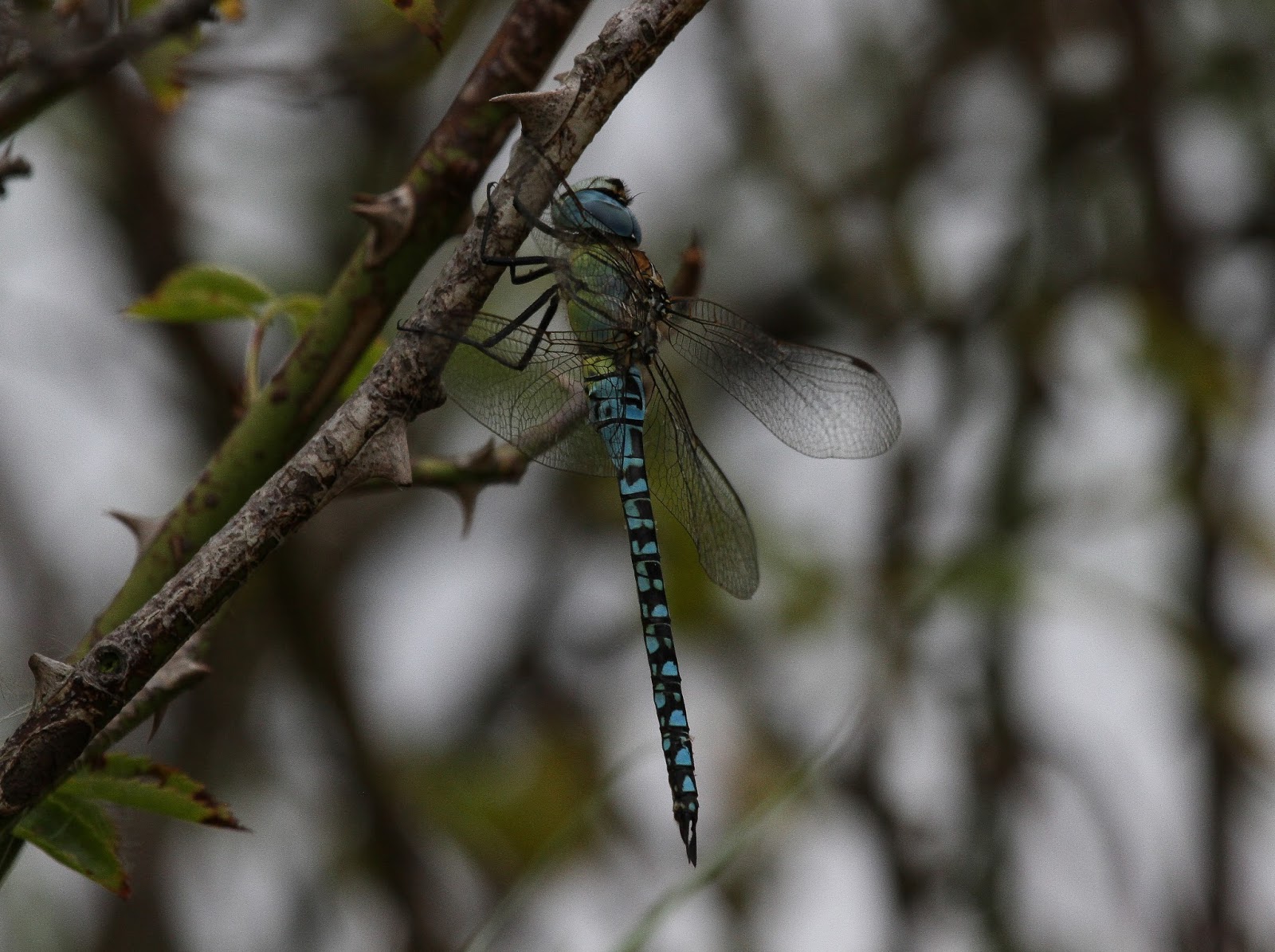
As a rare dragonfly was our first target we didn't need too early a start so didn't leave mine until about 09.00. We made our way down the A12 and onto Canvey Island to a ditch we had been given directions to. and within minutes we'd scored with several mega Southern Migrants Hawkers. My first dragonfly tick for many a long year! We went on to see c12 of these beauties within just the first 200 yards of the ditch and one that perched up allowing very close approach. Only 1 female was seem though. Also along the same stretch were loads of Scarce Emerald Damselflies, several Ruddy Darters plus c5 Marbled Whites, Essex Skipper, Wall Brown, Small Heath and a profusion of Common Blues.


 Southern Migrant Hawker


Scarce Emerald Damselflies


Marbled Whites

Small Heath

 Essex Skipper (in Essex!)

Next stop was a trip over the Dartford crossing to North Kent and Oare Marshes. I'd not been to this site before but it was lovely. The summering Bonaparte's Gull was present on arrival on the foreshore but quickly flew onto East Lagoon where it showed very nicely indeed. By far the best one I've ever seen in full summer plumage. The lagoon was full of waders too - 2 Spotted Redshanks, c10 Dunlin, 100's of Black-tailed Godwits, 1 Golden Plover and a scattering of Ruff. Add to that a Yellow Wagtail, Peregrine, Garganey, a singing Turtle Dove, a very pale Common Buzzard, Brown Hawker and Black-tailed Skimmer and it made for a very pleasant couple of hours.


Bonaparte's Gull

Last port of call was Cliffe Marshes where after a long hot walk we reached 'the 2nd viewing mound' past the black barn and got some very distant views of the Marsh Sandpiper plus the family of 7 Black-winged Stilts (3 adults and 4 three-quarters grown but flying young), 2 Water Rails, loads of Black-tailed Godwits, Ringed Plover and a Mediterranean Gull. Far nicer in my opinion was a bee tick in the form of the rare and localised Shrill Carder Bee at our feet! Along the track we also had a Grayling, my first of the year.

                Shrill Carder Bee

Minsmere day, 9 July 2017

It's not often we spend the whole day at one site but with nothing much else to get the juices flowing at the moment Jus, Andy and I headed to Minsmere for an extended mooch.

The primary aim was to see the long-staying Purple Heron which has been frequenting the reedbed and ditches in front of Bittern Hide. In the morning we spent a couple of hours in the hide and eventually the bird flew up but unfortunately for those of us in the right hand side of the hide it decided to fly left and miles away! The views were OK but we wanted much better. The supporting cast was pretty good however with a Hobby, a number of Bittern sightings including one feeding in the near pool, Marsh Harriers and Bearded Tits.


Bitterns


Deciding to return for another crack at the heron later in thee day we headed to the North Wall next where we were delayed by a lady reserve volunteer who showed us a few superb digger wasp sp by the path. We had Bee-wolf, Weevil-wolf, Ornate-tailed Wasp, Green-eyed Wasp and Ruby-tailed Wasp. This included Bee-wolfs and Weevil-wolfs carrying their prey items of Honey Bee and Weevil which was awesome! Jus produced his pheremone lure along the North Wall and with the conditions not really good enough it looked like we were going to dip until a Six-belted Clearwing suddenly appeared from nowhere and posed nicely.

Six-belted Clearwing

Bee-wolf

Weevil-wolf

 Ruby-tailed Wasp

A lovely Yellow-legged Clearwing then obliged to another lure close to Canopy Hide but was too quick for my camera. My clearwing list had gone from zero to 2 in a couple of hours!

After the obligatory visit to the cafe we set out on a wander along the south side of the scrapes and scored with 8+ Spotted Redshanks, several Ruff, c80 Mediterranean Gulls (including several young), 5 Little Gulls (4 ad sum and 1 1st sum), Sandwich Terns, Common Terns and loads of Barnacle Geese with young.


 Mediterranean Gulls

We opted to spend the time until 17.00 (if we needed to) back in Bittern Hide where this time the Purple Heron gave us some great flight views after a wait of about an hour. Loads more Bittern action and another different Hobby plus White Admiral back by the centre rounded things off very nicely.


 Purple Heron


Bee-eaters and Butterflies, East Midlands, 2 July 2017

I'd never been to see any of the previous breeding Bee-eaters that have turned up in recent years (mainly due to them being too far away) so with a small group close to the Notts/Leics border it was a bit of a no-brainer for our Sunday jaunt this weekend.
The whole 'event' at East Leake GPs was very well managed by the RSPB and we spent an enjoyable couple of hours there eventually seeing 5 individuals but most of the time it was 2 or 3 on view around a single tree between 2 gravel pits. There were plenty of Sand Martins breeding in the quarry too plus 3 Yellow Wagtail fly-overs, Sparrowhawk and Common Buzzard.


Bee-eaters

You know it's an important event when you get an AA sign!

Leaving the site we had planned to visit 'His Royal Highness' at Fermyn Woods in Northants next. Initially we went to the wrong entrance but at least that allowed us to take advantage of the cafe and the Red Kites circling low over the area. Re-locating we then walked into the wood along a ride and within a few minutes encountered a small group of people surrounding our 1st of several male Purple Emperors on the track! We went on to see 5 of these beauties including one flying round and then on the hubcap of a car back by the entrance! This ancient woodland is supurb for butterflies and we also saw numerous Silver-washed Fritillaries (including 1 valezina specimen), c15 White Admirals, 3+ Purple Hairstreaks plus the first Gatekeepers of the year, Red Admiral, Ringlets, Meadow Browns, Speckled Woods, Commas, Large Skipper, Small Skipper and Small White. Despite our best efforts though we couldn't find any White-letter Hairsreaks.


Purple Emperors


Purple Hairstreaks

Red Kite

Silver-washed Fritillary

Silver-washed Fritillary, valezina variant 


White Admirals

We ummed and arhed about our final location of the day but settled on Salcey Forest just to the SE of Northampton. Here we had direction of the best spot to check for the scarce and declining Wood White at it's closest site to home. The weather was very warm by now and along the track to the spot we located 5 individuals and eventually got 2 to settle long enough for some photos. Add Green-veined White, Large White and more Silver-washed Fritillaries and we were up to 17 butterfly species for the day. A calling Nuthatch was the only bird of note. 


Wood Whites