I've long been fascinated by old English and coloquial bird names. In Norfolk we have quite a rich tradition and we're all used to Harnser (Heron), Hedge Betty (Dunnock), Throstle (Mistle Thrush for all those West Brom fans out there!), Seven-whistler (Whimbrel), Norfolk Plover (Stone Curlew) and Sprosser (Thrush Nightingale) but I've just found this PDF file online which has hundreds. It's a safe dowload so feel free to click the link below if you are similarly interested.
https://ia801407.us.archive.org/29/items/glossaryofpopula00hett/glossaryofpopula00hett.pdf
Some of the highlights for me are:
Batty Bird - Little Egret
Billy-biter - Blue Tit
Blood Hoop - Bullfinch
Gunner - Great Northern Diver
Half Calloo - Whimbrel
Hill Lintie - Twite
Huck-muck - Long-tailed Tit
Jenny Howlet - Tawny Owl
Jetcock - Jack Snipe
Little Mason - Wheatear
Long-shanks - Black-winged Stilt
Midden Crow - Carrion Crow
Oar-cock - Water Rail
Parson - Cormorant
Peckel Dick - Goldfinch
Piewype - Lapwing
Scolder - Oystercatcher
Shriek Owl - Swift
Tongue Bird - Wryneck
The mind boggles!


Cuba, Day 14, 17 March 2017 - transit day Cayo Guillermo to Havana
Today was a big day of travelling. Beginning with an 8 hour drive back to Havana.
The causeway back to the mainland had one last surprise - a floating American White Pelican which is a rare but increasing visitor to the area. Double-crested Cormorants and an adult Great black-backed Gull plus Brown Pelicans, Laughing Gulls and Royal Terns followed. After that the journey yielded Cuban Black Hawk, Red-tailed Hawk, an Osprey carrying a fish near Moron and 3 American Kestrels as I struggled to keep my eyes open! A Small Indian Mongoose that ran across the road near Ciego de Avila was the only mammal of the whole trip!
The rest is boring travelling rubbish that I won't bother you with!
The trip had given me 57 new birds which was a more than pleasing haul.
The causeway back to the mainland had one last surprise - a floating American White Pelican which is a rare but increasing visitor to the area. Double-crested Cormorants and an adult Great black-backed Gull plus Brown Pelicans, Laughing Gulls and Royal Terns followed. After that the journey yielded Cuban Black Hawk, Red-tailed Hawk, an Osprey carrying a fish near Moron and 3 American Kestrels as I struggled to keep my eyes open! A Small Indian Mongoose that ran across the road near Ciego de Avila was the only mammal of the whole trip!
The rest is boring travelling rubbish that I won't bother you with!
The trip had given me 57 new birds which was a more than pleasing haul.
Cuba, Day 13, 16 March 2017 - Cueva del Jabali, Cayo Coco and Cayo Guillermo
My last full day in Cuba and I opted to take a look around the area surrounding Cueva del Jabali on Cayo Coco. I found the spot without too much trouble and on my arrival it was deserted which was nice. A walk of the trail from the carpark was very nice with 2 Key West Quail-doves (the main speciality here) being easily located. Cuban Tody, 2 Cuban Bullfinches, La Sagra's Flycatcher, 2 Red-legged Thrushes and a lovely Worm-eating Warbler were also seen before a coach load of noisy tourists turned up and I quit the scene. A short drive away along the entrance road I found a promising looking track so parked up and went for a wander. It proved very good with Prairie Warbler, 4 Oriente Warblers, 2 Cuban Bullfinches, 3 Western Spindalis, a territorial pair of Cuban Vireos, Loggerhead Kingbird and American Redstart being seen in one spot followed by a Ruddy Quail-dove further along the track.
I followed that up with a look at the lagoon on Cayo Coco which this time held 21 West Indian Whistling Ducks. I walked the mangrove scrub here for ages looking for Mangrove Cuckoo but it just wasn't to be. Instead I had arms-length views of Cuban Gnatcatcher and Cuban Pewee plus Great Lizard Cuckoo, 2 Zenaida Doves, 2 Northern Parulas and Black-and-white Warbler


I followed that up with a look at the lagoon on Cayo Coco which this time held 21 West Indian Whistling Ducks. I walked the mangrove scrub here for ages looking for Mangrove Cuckoo but it just wasn't to be. Instead I had arms-length views of Cuban Gnatcatcher and Cuban Pewee plus Great Lizard Cuckoo, 2 Zenaida Doves, 2 Northern Parulas and Black-and-white Warbler

Prairie Warbler

Cuban Vireo

Cuban Bullfinch

Cuban Pewee


Cuban Gnatcatcher

Zenaida Dove
Back on Cayo Guillermo in the late afternoon I ventured right to the far western end to explore the roadside. Here there were a good number of migrant warblers with 2 Cape May Warblers, 2 Common Yellowthroats, 2 American Redstarts, the only Yellow Warbler of the trip, Black-throated Blue Warbler, Palm Warblers, 2 Northern Waterthrushes plus a Northern Rough-winged Swallow. Back near our resort a perched roadside Cuban Black Hawk was photographically nice!
To finish off with I managed to find away to the edge of the wader lagoon from the north where I was able to get much closer to the feeding Stilt Sandpipers and Short-billed Dowitchers and also has 2 Green Herons, a Little Blue Heron and another Common Yellowthroat.

Cape May Warbler

American Redstart

Common Yellowthroat


Northern Waterthrushes

American Redstart

Cuban Black Hawk


Stilt Sandpipers and Short-billed Dowitchers
Cuba, Day 12, 15 March 2017 - Cayo Guillermo
I actually managed to have some breakfast this morning and then persuade Belinda to come out birding with me for a few hours this morning. It was mainly the lure of her seeing flamingoes to be honest!
The lagoon/scrape by the road next to the entrance road to our resort was good for birds all the time we were there and this morning was no exception. 5 Roseate Spoonbills were nice and close as was Tri-coloured Heron plus 6 White Ibis. On the lagoon opposite there were loads of showy American Flamingoes, 2 Green Herons, Tri-coloured Heron, 2 Little Blue Herons, a smattering of Great blue Herons (including a white morph) and Snowy Egrets as well as numerous Great Egrets. Over the lagoon were also a single Caspian Tern, a few Royal Terns and a Lesser Black-backed Gull. Waders comprised c40 Short-billed Dowitchers, loads of Stilt Sandpipers, 1 Lesser Yellowlegs, numerous Black-necked Stilts and 1 Grey Plover. 3 Northern Shoveler were also new for the trip.
We tore ourselves away to the far end of Cayo Guillermo to explore scub ther but found this a frustrating exercise. There is so much construction work going on this wasn't very enjoyable. We failed to find Bahama Mockingbird or much else but having flogged the area for some while we returned to the road to find a nice Grey Kingbird perched up in roadside bushes. This proved to be my last world tick of the trip.
Back near the hotel we walked over the bridge connecting Cayo Guillermo to Cayo Coco with loads of Laughing Gulls and Double-crested Cormorants for company. A male Common Yellowthroat and Northern Parula also popped up in roadside mangrove scrub.


In the late afternoon I ventured out to the west end of Cayo Guillermo again to try the area around Playa Pillar. The beach are produced Ring-billed Gull and Red-breasted Merganser to add to the trip list but the dune scrub was very disappointing. Back on the road however I hit a little pocket of activity and was able to fill my boots with some simply mega views of c4 Cape May Warblers, c10 Cuban Emeralds, American Redstart, Grey Catbird and La Sagra's Flycatcher. On the way back I managed to photograph a male American Kestrel


The lagoon/scrape by the road next to the entrance road to our resort was good for birds all the time we were there and this morning was no exception. 5 Roseate Spoonbills were nice and close as was Tri-coloured Heron plus 6 White Ibis. On the lagoon opposite there were loads of showy American Flamingoes, 2 Green Herons, Tri-coloured Heron, 2 Little Blue Herons, a smattering of Great blue Herons (including a white morph) and Snowy Egrets as well as numerous Great Egrets. Over the lagoon were also a single Caspian Tern, a few Royal Terns and a Lesser Black-backed Gull. Waders comprised c40 Short-billed Dowitchers, loads of Stilt Sandpipers, 1 Lesser Yellowlegs, numerous Black-necked Stilts and 1 Grey Plover. 3 Northern Shoveler were also new for the trip.
We tore ourselves away to the far end of Cayo Guillermo to explore scub ther but found this a frustrating exercise. There is so much construction work going on this wasn't very enjoyable. We failed to find Bahama Mockingbird or much else but having flogged the area for some while we returned to the road to find a nice Grey Kingbird perched up in roadside bushes. This proved to be my last world tick of the trip.
Back near the hotel we walked over the bridge connecting Cayo Guillermo to Cayo Coco with loads of Laughing Gulls and Double-crested Cormorants for company. A male Common Yellowthroat and Northern Parula also popped up in roadside mangrove scrub.


Roseate Sponnbills

Snowy Egret

Tri-coloured Heron

Black-necked Stilt

Grey Kingbird


American Flamingoes

Caspian Tern

Black-necked Stilt

Great Egret

Royal Tern

Double-crested Cormorant

Northern Parula

White Ibis

Common Yellowthroat
In the late afternoon I ventured out to the west end of Cayo Guillermo again to try the area around Playa Pillar. The beach are produced Ring-billed Gull and Red-breasted Merganser to add to the trip list but the dune scrub was very disappointing. Back on the road however I hit a little pocket of activity and was able to fill my boots with some simply mega views of c4 Cape May Warblers, c10 Cuban Emeralds, American Redstart, Grey Catbird and La Sagra's Flycatcher. On the way back I managed to photograph a male American Kestrel

Brown Pelican

Laughing Gull

Ring-billed Gull

Cuban Emerald


Cape May Warblers

American Kestrel
Looking for spring migrants, Covehithe, Kessingland, Carlton Marshes & Lowestoft, 1 & 2 April 2017
It's been a weekend of much walking along the coastal strip between Covehithe and Lowestoft North Denes. And it was hard work winkling any spring migrants out!
Nevertheless at Covehithe on Saturday an early Swallow around the houses near the church was quickly followed by c10 Sand Martins around their cliff colony. Walking to Benacre Broad only produced 8 Avocet and Marsh Harrier though. The broad has been breached so we couldn't continue our walk north. After lunch at the Sweet Retreat cafe in Kessingland we walked down to Kessingland Sluice and a little further south to near Beach Farm and didn't see a single migrant only a pair of Stonechats and an unseasonal Painted Lady. After that I took a quick look at Kessingland Sewage Works finding a single White Wagtail, 2 Grey Wagtails and Reed Bunting on the filter beds plus a few singing Chiffchaffs (one rung).
Sunday saw us make a late start but by just after midday we were at Carlton Marshes. Again things were quiet but after walking every path on the reserve winkled out 3 Willow Warblers, 2 Sedge Warblers (my earliest ever by some way), 8 Cetti's Warblers, 1 Blackcap, several Reed Buntings, 1 Stonechat, Sparrowhawk, Marsh Harrier, 1 Ruff, 1 Avocet and 1 Little Egret on the scrape plus big numbers of Peacocks, a Brimstone and a few Small Tortoiseshells but little else.
Venturing into Lowestoft next I found nothing in the Ness Point area but after coffee in the Sparrows Nest cafe a single White Wagtail was found on Denes Oval. On the way out of town we stopped so I could look at Hamilton Dock and sure enough the imm drake Eider and juv Shag were see well from near South Pier. It was also interesting to note how Kittiwakes have taken to nesting on window ledges on buidlings along the seaward side of town (see photos below)!
On the way home it would have been a shame not to stop in Worlingham where bumping in to Jeremy Gaskell we found 9 Waxwings in a tree at the north end of Garden Lane providing a fitting end to a weekend of hard work!


Nevertheless at Covehithe on Saturday an early Swallow around the houses near the church was quickly followed by c10 Sand Martins around their cliff colony. Walking to Benacre Broad only produced 8 Avocet and Marsh Harrier though. The broad has been breached so we couldn't continue our walk north. After lunch at the Sweet Retreat cafe in Kessingland we walked down to Kessingland Sluice and a little further south to near Beach Farm and didn't see a single migrant only a pair of Stonechats and an unseasonal Painted Lady. After that I took a quick look at Kessingland Sewage Works finding a single White Wagtail, 2 Grey Wagtails and Reed Bunting on the filter beds plus a few singing Chiffchaffs (one rung).
Sunday saw us make a late start but by just after midday we were at Carlton Marshes. Again things were quiet but after walking every path on the reserve winkled out 3 Willow Warblers, 2 Sedge Warblers (my earliest ever by some way), 8 Cetti's Warblers, 1 Blackcap, several Reed Buntings, 1 Stonechat, Sparrowhawk, Marsh Harrier, 1 Ruff, 1 Avocet and 1 Little Egret on the scrape plus big numbers of Peacocks, a Brimstone and a few Small Tortoiseshells but little else.
Venturing into Lowestoft next I found nothing in the Ness Point area but after coffee in the Sparrows Nest cafe a single White Wagtail was found on Denes Oval. On the way out of town we stopped so I could look at Hamilton Dock and sure enough the imm drake Eider and juv Shag were see well from near South Pier. It was also interesting to note how Kittiwakes have taken to nesting on window ledges on buidlings along the seaward side of town (see photos below)!
On the way home it would have been a shame not to stop in Worlingham where bumping in to Jeremy Gaskell we found 9 Waxwings in a tree at the north end of Garden Lane providing a fitting end to a weekend of hard work!


Ever-resourceful Kittiwakes, Lowestoft!
Cuba, Day 11, 14 March 2017 - Cayo Paredon Grande, Cayo Coco and Cayo Guillermo
I'd arranged to meet my guide Odey at the Villa Azul on Cayo Coco this morning. Despite it still being dark when I arrived to pick him up he was ready and waiting by the carpark. He broke the news that he was unable to guide me on the other morning I'd booked with him but that we'd spend today trying to get me all my target species.
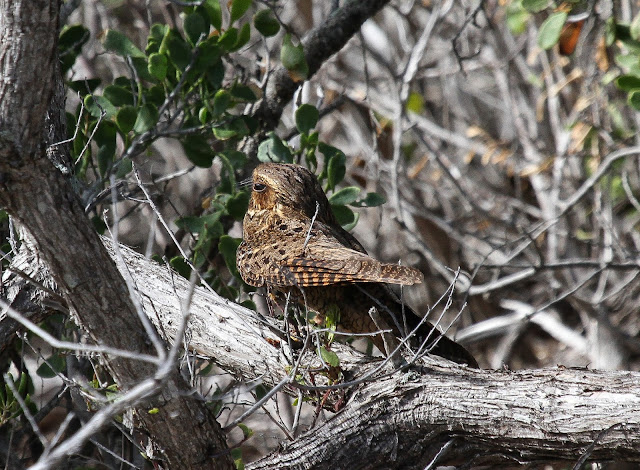
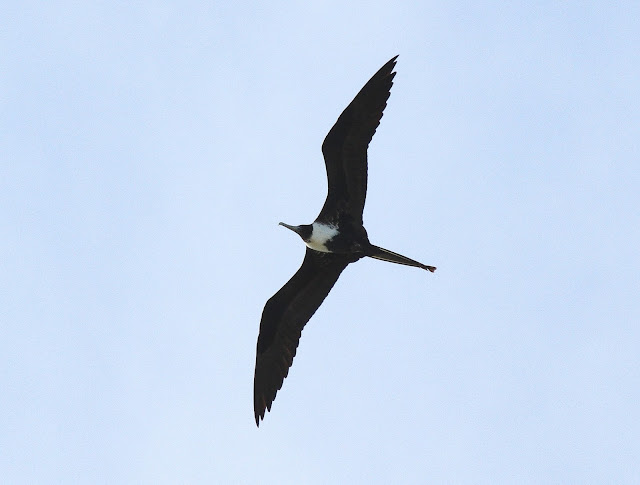
We proceeded to drive a further 30 minute to the northernmost tip of Cayo Paredon Grande around the area of the lighthouse. En-route we had Grey Plover, 4 Great Blue Herons (including a white morph) and 2 American Flamingoes. Immediately after getting out of the car a Cuban Gnatcatcher showed briefly before we walked further down a track in search of Bahama Mockingbird. We managed to get some decent bins views of this elusive bird but despite Odey's continued use of a tape (and little too much in my opinion) it wouldn't come closer and eventually disappeared completely. After joining forces with Dutch birder Ruben Vlot and his wife we ventured along the main track and very quickly got onto another target - the rare and range-restricted Thick-billed Vireo. It was interesting to note it had 2 blue rings on its left leg from an ongoing monitoring scheme. Further down the track we had 2 other unringed individuals. What quickly followed was some amazing views of the 4th and final target of the area - Oriente Warbler, another endemic. In the immediate area we also had Prairie Warbler, 2 Western Spindalis, a total of 3 Cuban Gnatcatchers, Palm Warbler, a male Common Yellowthroat, 2 Cuban Bullfinches, Magnificent Frigatebirds, 2 Northern Pintails over and 2 Cuban Orioles. Next we explored another track that led SE from the lighthouse and quickly flushed a nightjar sp from the path. Having no white in the wings or tail and being pretty rufous got us (and Odey!) very interested. Luckily I managed to re-find it perched on a log and it was nailed as a Chuck-will's-widow. According to Odey this was a first record for Cayo Paredon Grande but reading literature I'm not sure it can be. A nice perched and close Cuban Black Hawk finally put that species to well and truly to bed and 2 Cuban Green Woodpeckers finished things off.
Leaving CPG we stopped very briefly on Cayo Romano where to our amazement Odey taped out a Zapata Sparrow which Ruben had somehow managed to miss at Zapata!





Parting company with our Dutch friends Odey and I headed for Cayo Coco next. Viewing from a bridge looking over a large lagoon we soon spotted a loafing group of 14 West Indian Whistling Ducks which we were able to get closer to by asking the security guards at the adjacent resort. A couple of Northern Flickers were knocking about the hotel area before we walked some scubby tracks beside the lagoon in search of Mangrove Cuckoo. It wasn't to be as we only saw Cuban Vireo and Cuban Pewee and quickly moved onto the beach at nearby Playa Colorada. This undeveloped stretch of beach can be good for waders but it was high tide when we arrived and we could only find c50 Turnstones, 1 Willet, 1 Semi-palmated Plover and c30 Sanderling plus a fly-over Crested Caracara and Brown Pelican.


I dropped Odey off at his digs and drove back to Cayo Guillermo with a feeling that the trip was now about to fizzle out a bit as I'd seen all my main targets with 2 full days to spare! The afternoon was to have been the day I drove to Camaguey and then onto Najasa but I was feeling crap with a touch too much sun and really coudn't have made the long drive. It would have got me 3 new birds, none of which had huge appeal so I decided against it.
Later in the afternoon feeling a little more chipper I went for a short wander along the road just outside of resort entrance - there were plenty of Short-billed Dowitchers and Stilt Sandpipers on the scrape plus Black-necked Stilts flying in and a pair of American Flamingoes.
We proceeded to drive a further 30 minute to the northernmost tip of Cayo Paredon Grande around the area of the lighthouse. En-route we had Grey Plover, 4 Great Blue Herons (including a white morph) and 2 American Flamingoes. Immediately after getting out of the car a Cuban Gnatcatcher showed briefly before we walked further down a track in search of Bahama Mockingbird. We managed to get some decent bins views of this elusive bird but despite Odey's continued use of a tape (and little too much in my opinion) it wouldn't come closer and eventually disappeared completely. After joining forces with Dutch birder Ruben Vlot and his wife we ventured along the main track and very quickly got onto another target - the rare and range-restricted Thick-billed Vireo. It was interesting to note it had 2 blue rings on its left leg from an ongoing monitoring scheme. Further down the track we had 2 other unringed individuals. What quickly followed was some amazing views of the 4th and final target of the area - Oriente Warbler, another endemic. In the immediate area we also had Prairie Warbler, 2 Western Spindalis, a total of 3 Cuban Gnatcatchers, Palm Warbler, a male Common Yellowthroat, 2 Cuban Bullfinches, Magnificent Frigatebirds, 2 Northern Pintails over and 2 Cuban Orioles. Next we explored another track that led SE from the lighthouse and quickly flushed a nightjar sp from the path. Having no white in the wings or tail and being pretty rufous got us (and Odey!) very interested. Luckily I managed to re-find it perched on a log and it was nailed as a Chuck-will's-widow. According to Odey this was a first record for Cayo Paredon Grande but reading literature I'm not sure it can be. A nice perched and close Cuban Black Hawk finally put that species to well and truly to bed and 2 Cuban Green Woodpeckers finished things off.
Leaving CPG we stopped very briefly on Cayo Romano where to our amazement Odey taped out a Zapata Sparrow which Ruben had somehow managed to miss at Zapata!

Thick-billed Vireo


Oriente Warbler

Chuck-wills-widow

Cuban Black Hawk


Cuban Gnatcatcher

Western Spindalis

Magnificent Frigatebird

Zapata Sparrow
Parting company with our Dutch friends Odey and I headed for Cayo Coco next. Viewing from a bridge looking over a large lagoon we soon spotted a loafing group of 14 West Indian Whistling Ducks which we were able to get closer to by asking the security guards at the adjacent resort. A couple of Northern Flickers were knocking about the hotel area before we walked some scubby tracks beside the lagoon in search of Mangrove Cuckoo. It wasn't to be as we only saw Cuban Vireo and Cuban Pewee and quickly moved onto the beach at nearby Playa Colorada. This undeveloped stretch of beach can be good for waders but it was high tide when we arrived and we could only find c50 Turnstones, 1 Willet, 1 Semi-palmated Plover and c30 Sanderling plus a fly-over Crested Caracara and Brown Pelican.

Northern Flicker


West Indian Whistling Ducks

Cuban Vireo

Brown Pelican

Crested Caracara
Later in the afternoon feeling a little more chipper I went for a short wander along the road just outside of resort entrance - there were plenty of Short-billed Dowitchers and Stilt Sandpipers on the scrape plus Black-necked Stilts flying in and a pair of American Flamingoes.
Subscribe to:
Posts (Atom)